Partnership Over Transactions: Why Every Customer Deserves a Strategic Approach
8 June 2026
In today’s business environment, many suppliers are judged on price, speed and availability.
Whilst these factors remain important, we believe the strongest and most successful client relationships are built on something far more valuable: partnership.
At GBF, we are fortunate to work with organisations ranging from multinational businesses operating across multiple sites and managing thousands of assets, through to independent businesses using a single desktop printer within an office environment.
The scale may differ considerably.
Our approach does not.
Understanding Before Recommending
Some of our larger clients have dedicated procurement teams, sustainability managers, operational leaders and technical specialists involved in purchasing decisions.
Projects often involve multiple stakeholders, detailed analysis, asset audits, sustainability objectives, efficiency reviews and long-term strategic planning.
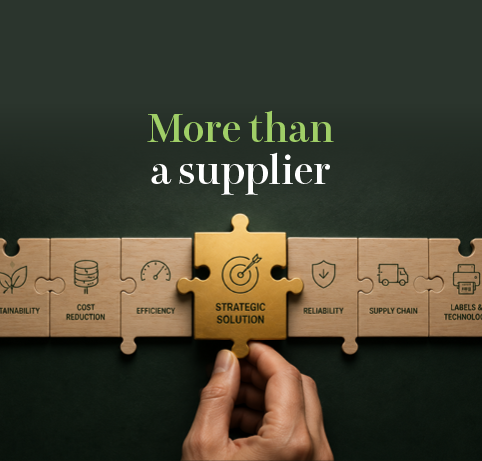
In these environments, our role extends well beyond supplying labels, printers or consumables.
We become an extension of the client’s team.
We help identify opportunities to improve efficiency, reduce waste, strengthen resilience, support sustainability objectives and optimise operational performance.
The reality is that smaller businesses deserve exactly the same level of thinking.
Whilst they may not have a procurement department or a dedicated buying team, they still face many of the same challenges:
- Rising operational costs
- Efficiency pressures
- Sustainability expectations
- Business continuity concerns
- Resource limitations
- The need to maximise value from every investment
The only difference is that they often have fewer internal resources available to analyse and solve these challenges themselves.
Bringing Enterprise Thinking to Businesses of Every Size
One of the questions we continually ask ourselves at GBF is:
“How can we bring the same consultative value we provide to large corporate organisations to smaller businesses?”
The answer lies in taking the time to understand each client’s individual circumstances.
Rather than simply responding to an enquiry, we seek to understand:
- What are they trying to achieve?
- What challenges exist within their current process?
- Are there opportunities to improve efficiency?
- Can sustainability be enhanced?
- Is there a more cost-effective solution?
- Are there risks that could be mitigated?
These conversations often uncover opportunities that were not originally part of the brief.
Sometimes a customer requests labels.
What they actually need is a more efficient process.
Sometimes a customer requests a printer.
What they actually need is improved reliability and support.
Sometimes a customer requests a quotation.
What they actually need is advice.
Why Our Employee Ownership Model Matters
As an Employee Ownership Trust (EOT) business, our perspective is naturally different.
Every member of the GBF team has a vested interest in building long-term relationships and delivering genuine value.
Success is not measured solely by individual transactions.
It is measured by trust, repeat business, client retention and helping customers achieve their objectives.
Whether a client uses 100 million labels per year across a national operation or 100,000 labels through a single desktop printer, they are equally important to us.
Every customer contributes to the success of our business.
Every customer deserves our best thinking, our experience and our support.
Looking Forward
As supply chains become more complex, sustainability expectations continue to evolve and businesses face increasing pressure to improve efficiency, the role of a supplier must evolve too.
The future belongs to organisations that move beyond transactional relationships and focus on genuine partnership.
At GBF, that has always been our ambition.
To listen first.
To understand.
To advise.
To support.
And to build relationships that create value for the long term, regardless of the size of the organisation we are working with.
Because partnership should never be reserved for the biggest customers.