GBF Operational Insights
12 August 2026
Insight One
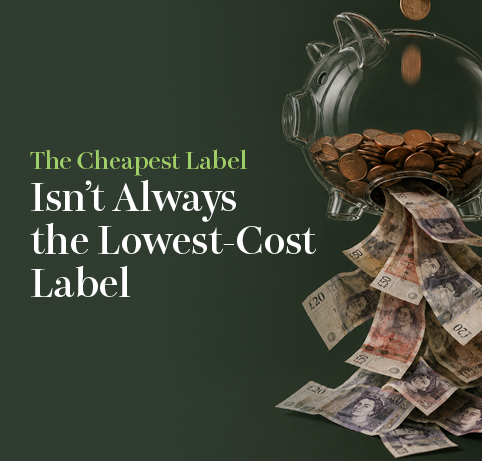
The Cheapest Label Isn’t Always the Lowest-Cost Label
Looking beyond purchase price to understand the true cost of operational performance.
Welcome to GBF Operational Insights
Every organisation is under pressure to improve efficiency, reduce waste and control costs.
At GBF, we’ve spent more than 30 years working alongside manufacturers, warehouse operators and logistics businesses, helping them solve operational challenges through effective labelling and identification solutions.
Along the way, we’ve learned that many of the biggest improvements don’t come from changing products—they come from asking better questions.
That’s why we’ve created GBF Operational Insights.
This series shares practical observations from the world of manufacturing, warehousing and logistics, with the aim of encouraging better operational thinking and more informed business decisions.
The Cheapest Label Isn’t Always the Lowest-Cost Label
One of the most common questions we’re asked is:
“What’s your cheapest label?”
It’s an understandable question.
But it’s rarely the most important one.
When comparing suppliers, it’s easy to focus on the price printed on the quotation. What isn’t always visible is the cost of using that label every day within a busy operation.
A label that contributes to printer downtime, poor barcode scan rates, unnecessary reprints or slower application can quickly become far more expensive than the initial saving ever justified.
These hidden costs often outweigh the difference of a penny or two per label.
That’s why, before recommending a solution, we spend time understanding the wider operation.
Where will the label be used?
What environment will it work in?
How critical is first-time scan accuracy?
What happens if the process stops?
The answers to these questions help determine which solution will deliver the best long-term operational performance—not simply the lowest purchase price.
Ultimately, the conversation shouldn’t just be about buying labels.
It should be about supporting productivity, reducing disruption and improving reliability across the entire process.
Perhaps the better question isn’t:
“What’s your cheapest label?”
Perhaps it’s:
“Which solution gives us the lowest total cost of ownership?”
They’re two very different conversations.
And, in our experience, organisations that ask the second question consistently make better long-term decisions.
Questions to Consider
Before your next procurement review, ask yourself: