‘A Label Is Only One Part of the Process’
6 October 2026
A label may be the product we manufacture, but increasingly it is only one part of what our customers need us to manage.
For larger or more complex organisations, successful labelling isn’t simply about buying the correct specification at the right price. It is about ensuring the right materials are available, in the right quantities, at the right locations and at the right time. Alongside that sit stock management, supply-chain resilience, technology, sustainability and continuous improvement.
At GBF, we think of this broader responsibility as Solutions Management.
Beyond the label
Stock control is a good example. Too little stock creates operational risk, while too much ties up cash, consumes space and increases the possibility of obsolescence. Understanding usage patterns, lead times, demand and appropriate safety-stock levels allows us to manage this much more intelligently.
The question becomes less about how many labels should we manufacture? and more about how do we make sure the customer always has what they need?
The same thinking applies to materials and the wider supply chain.
Global material markets change. Lead times move, manufacturers rationalise ranges, costs fluctuate and established materials can become difficult to source. We don’t believe our customers should have to become experts in the global self-adhesive materials market simply to keep their operations running.
Our role is to help navigate that complexity. That means understanding critical specifications, working with the supply chain, identifying potential risks and, where appropriate, exploring and qualifying alternatives before a shortage becomes an operational problem.
We cannot remove every supply-chain challenge, but we can make sure our customers don’t have to navigate them alone.
Technology, sustainability and improvement
The opportunity also extends beyond materials. Printers, applicators, scanners, software, automation and data all interact with modern labelling operations.
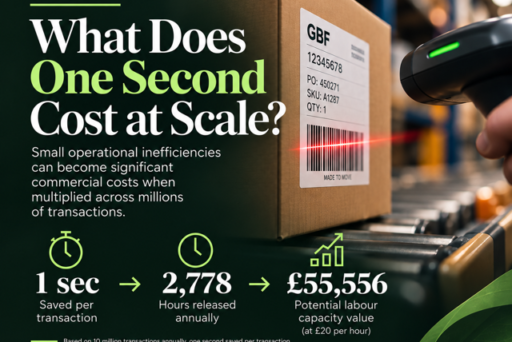
Sometimes the greatest saving isn’t achieved by reducing the price of a label. It comes from reducing an intervention, removing a manual process, improving stock visibility, increasing reliability or designing a better workflow.
Sustainability should be considered in much the same way.
Changing to a different material may be part of the answer, but so might reducing waste, consolidating deliveries, improving stock management, reducing obsolescence or finding a better route for backing material. The strongest sustainability initiatives often make good commercial sense too: less material, less waste and better use of resources.
And none of this should stop when an account is won.
Once we understand a customer’s operation, we should continually be asking: what could we do better?
That might mean reviewing materials, changing stock levels, introducing technology, reducing waste, identifying alternative sources or simply finding a smarter way of doing something that has always been done the same way.
Solutions Management
Quality, consistency, compliance and reliability will always matter. They are fundamental to what we do.
But we believe they should be the starting point rather than the full extent of the relationship.
Stock. Supply chain. Materials. Technology. Sustainability. Risk. Continuous improvement.
These things are connected, and a good partner should help connect them.
Because ultimately, our customers don’t simply need another roll of labels. They need confidence that their operation will have what it needs to keep moving — today, tomorrow and when circumstances change.
The label is only one part of the process. Managing everything around it is where partnership begins.